Alaska Bush Flights
There is a version of Alaska that only exists from the air. Rivers braid across tundra in patterns no map can fully capture. Glacier systems spill between peaks like frozen waterfalls. A single moose stands in a willow flat, unaware of anything overhead. You do not see this from a highway. You see it from a bush plane.
Golden Eagle Outfitters has been putting travelers into that version of Alaska for decades. We run bush flights out of Kotzebue and Delta Junction to destinations with no road, no runway, and no other way in. This page explains what bush flying is, who it is for, and what first-time passengers should know before they climb aboard.
The Aircraft That Make It Possible
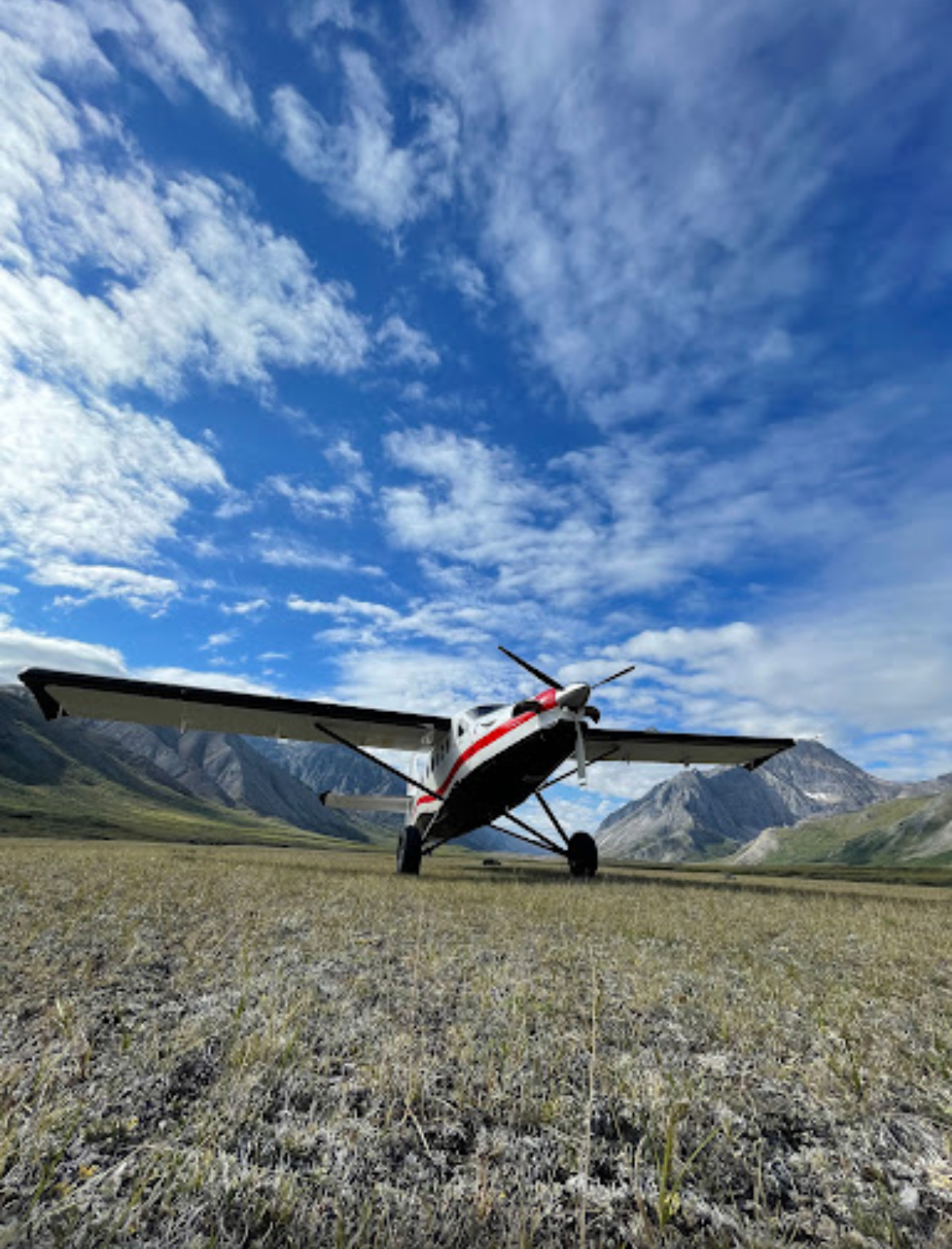
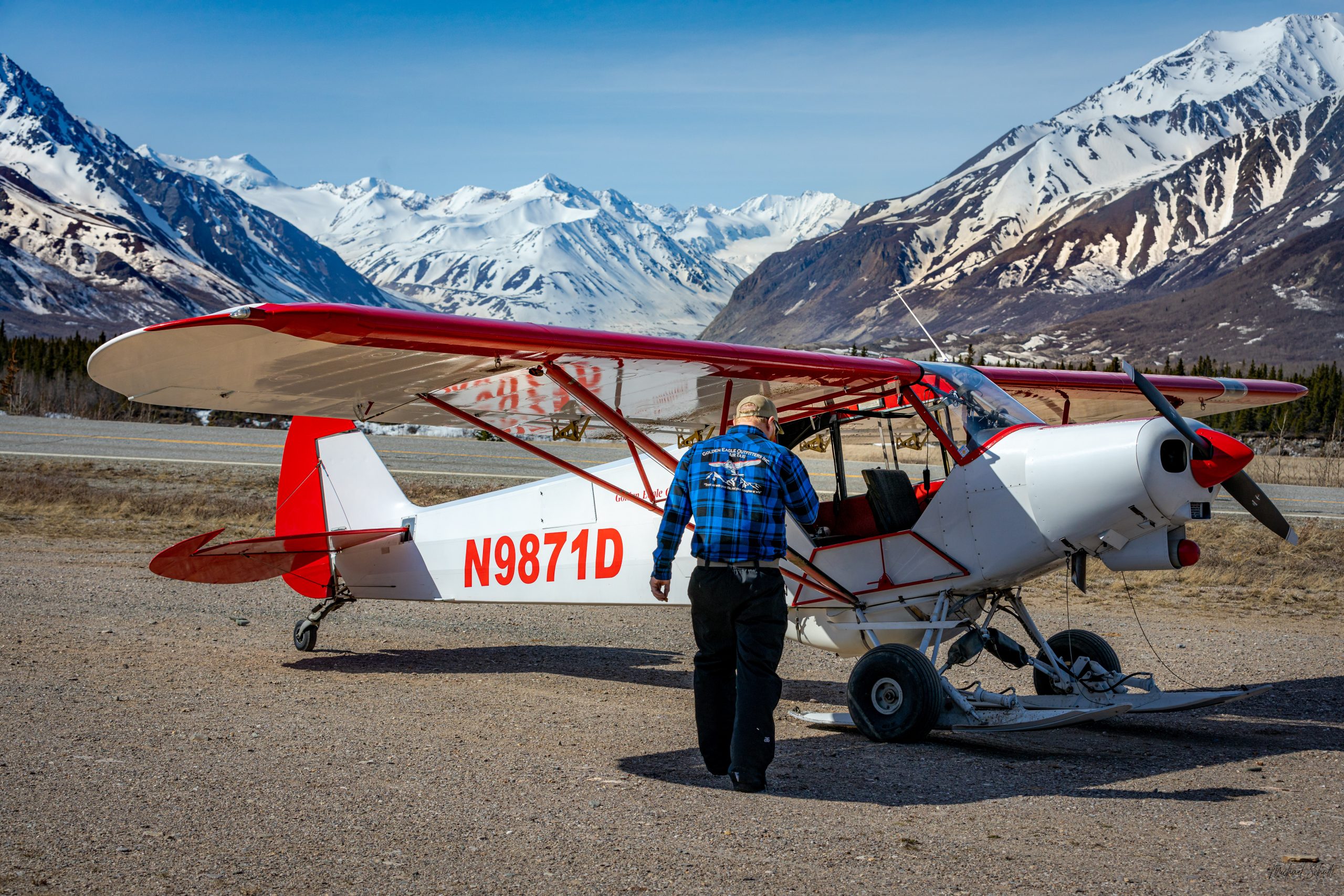
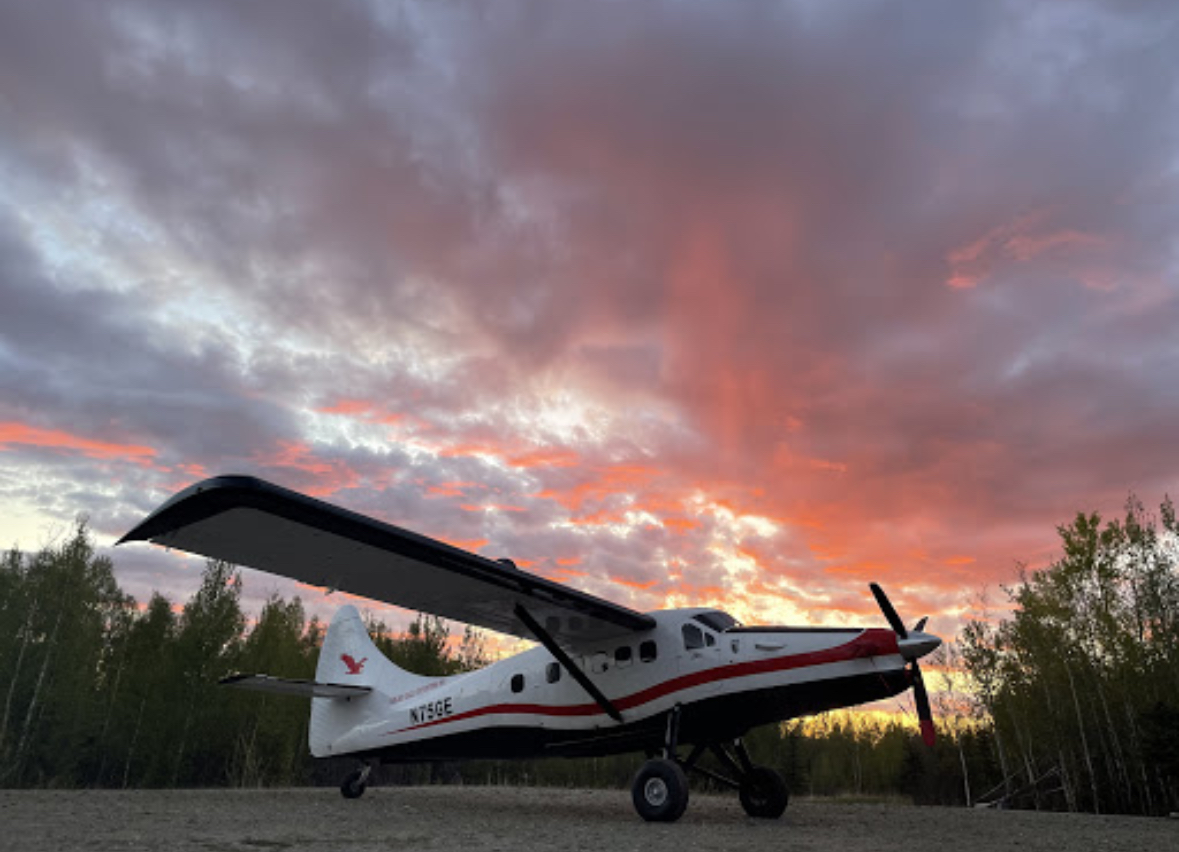
Bush planes are not smaller versions of commercial jets. They are a different category of machine, built for terrain that would tear the landing gear off anything designed for pavement. High wings, big tires, short takeoff rolls, and simple systems that a pilot can manage alone in the field.
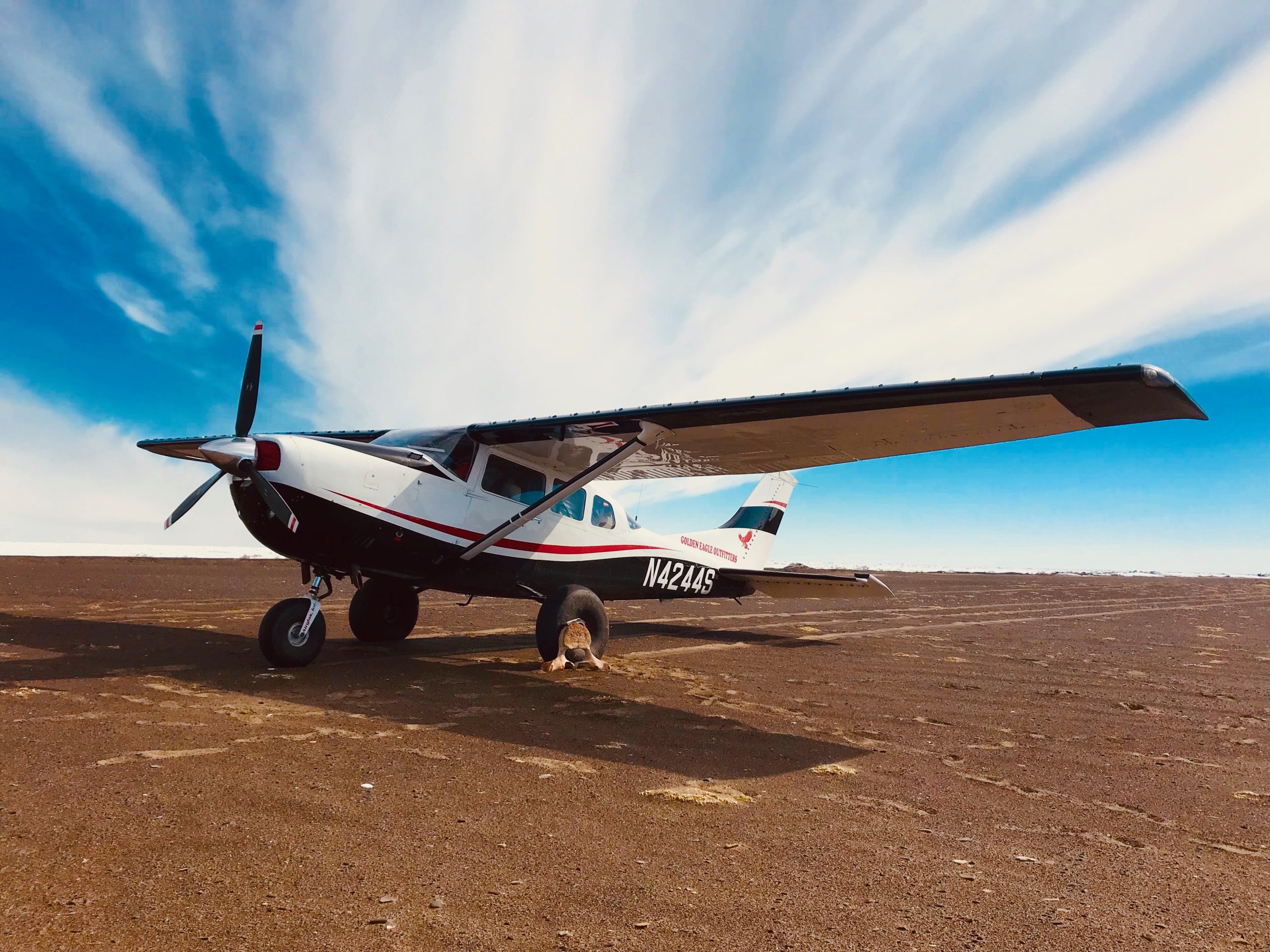
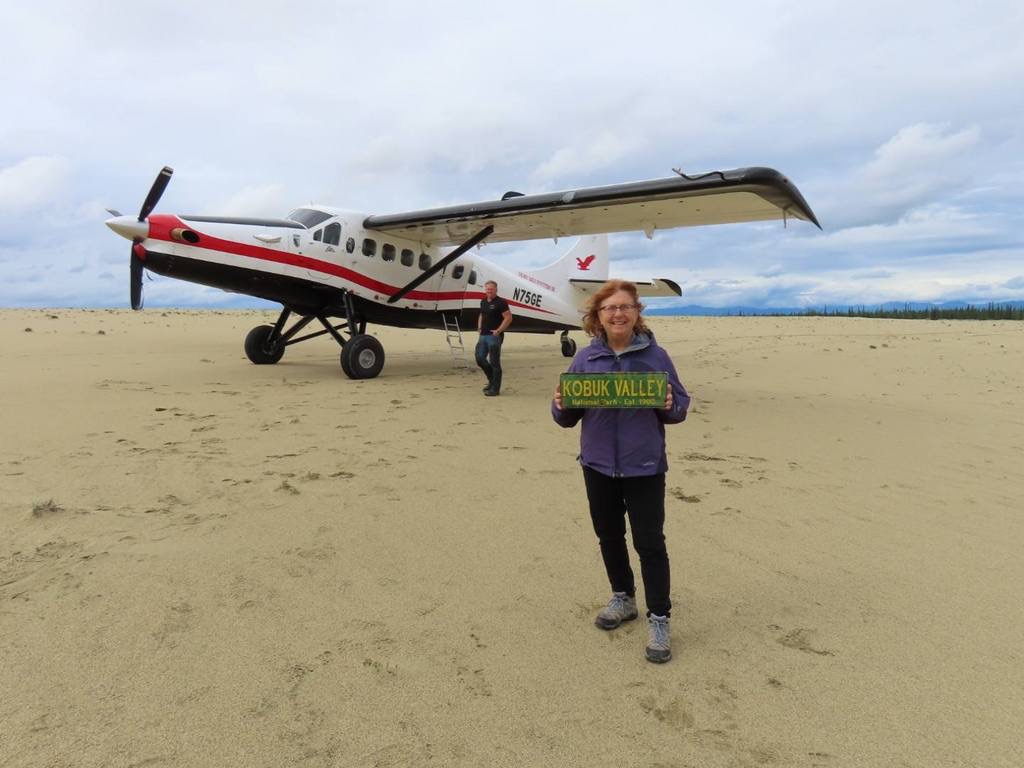
Our fleet is built around two workhorses. The Cessna 206 carries smaller parties and can slip into strips that would rule out a larger plane. The DeHavilland Otter takes heavier loads and bigger groups, which matters when you are moving expedition gear or a full film crew. Both are maintained on strict schedules and flown by pilots who have spent their careers in this state.
Other aircraft you may see on Alaska strips include Piper Super Cubs, DeHavilland Beavers, and Cessna 185s — each with its own strengths depending on the mission.
What Determines Whether a Site Is Landable
Not every flat spot works as a runway. Pilots evaluate a site on three things: length, surface, and escape route.
Length matters because bush planes need room to accelerate and stop. Surface matters because sand, gravel, and tundra behave very differently under tires — soft ground can grab a wheel and end a landing badly. Escape route matters because if something goes wrong on approach, the pilot needs a way out that does not involve a mountain.
That is why the same coordinates can be flyable one week and not the next. Rain softens gravel. Snow hides rocks. A river that was low last month can flood a bar after a warm spell. Our pilots overfly every site before committing, and they will call off a landing if conditions have changed.
For travelers who want a lower-commitment introduction to this kind of flying, our Alaska flightseeing tours stay in the air rather than landing in the field.
What It Feels Like to Fly Low Over Alaska
Flying a bush plane is not like flying a commercial route. There is no cabin service, no overhead bins, and no altitude where the landscape flattens into abstraction. You fly low enough to read the ground — the pattern of animal trails, the color of glacial silt in a river, the way spruce gives way to tundra as you climb north.
Noise levels are higher than most passengers expect. Hearing protection is common on longer flights. Views are better than most passengers expect too. If you are flying into the Arctic, you may spend an hour watching caribou move across a landscape with no fence, road, or building in sight.
The experience is not for everyone. If you want smooth, quiet, and predictable, this is not that. If you want to feel the country unfold beneath you, it is exactly that.
Weight, Balance, and Why Soft Bags Win
Small aircraft have hard limits. Every pound on board — passenger, gear, fuel, cargo — shifts the center of gravity, and that affects how the plane handles in the air. Pilots calculate these numbers before every flight. There is no negotiating with physics.
This is why we ask for body weights and gear weights when you book. It is also why soft-sided duffels are strongly preferred over hard cases. Soft bags squish into odd corners of a cabin, which means more of your gear fits and fewer trips are needed.
If your expedition includes heavy equipment — rafts, coolers, generators, crates — tell us early. We may need to assign a larger aircraft, plan multiple loads, or split your party across two planes.
Anglers moving fishing gear to remote water can review our Fly-In Fishing Alaska and Alaska World-Class Fishing pages for load planning tips.
Trips People Take Bush Flights For
Bush flights serve every kind of traveler who needs to get somewhere the road does not go. A few of the most common reasons:
-
Park access — Reaching Gates of the Arctic or Kobuk Valley, both of which sit entirely off the road grid.
-
Wilderness drop-offs — Being left at a remote site for days or weeks, then picked up later. See our Alaska wilderness drop-offs page for how that works.
-
River expeditions — Hauling rafts and paddlers to a remote put-in. Our Alaska rafting drop-off service covers gear transport.
-
Hiking and camping trips — Flying into alpine basins or tundra flats with a pack. See Alaska hiking drop-off service and Alaska camping drop-off service.
-
Winter access — Ski-equipped flights for backcountry riders through our Alaska backcountry skiing and snowboarding service.
-
Wildlife viewing — Low passes over areas where bears, moose, and caribou are active. Our Alaska wildlife viewing tours are built around this.
For travelers who want the plane to themselves with a fully custom itinerary, our Alaska private air charter page explains that option.
Why Fly With Golden Eagle Outfitters
Our pilots were raised in Alaska, and they have been flying its backcountry for most of their adult lives. They know which gravel bars hold after a week of rain, which passes close in by early afternoon, and which rivers run too shallow in August to land on. That knowledge is not something you can download or learn from a manual. It comes from years of flying the same routes and paying attention.
If you are heading into the Arctic, our Kotzebue air taxi covers the northwest hub. For travelers based in Fairbanks, our Fairbanks flightseeing tours and Denali flightseeing tours offer shorter aerial introductions. For multi-day expeditions, our remote wilderness float trips combine air access with guided river travel. And for anyone who wants the plane to themselves, our Alaska private air charter page explains how that works.
Common Questions From First-Time Passengers
Do I need to be a certain age?
No. Children are welcome with advance notice. We ask for ages and weights when you book so we can plan seating and loading.
What is the longest flight you operate?
Some Arctic routes run an hour or more in each direction. Most flights are shorter. Flight time depends on your destination and the route conditions on the day.
Can I bring a pet?
Occasionally, with advance arrangements. Contact us before booking to discuss the details.
What happens if I get airsick?
It happens to some passengers, especially on turbulent days. Motion sickness medication taken before the flight helps. Tell your pilot if you start feeling unwell — they may be able to adjust the route or altitude.
How much luggage can I bring?
That depends on the aircraft and the number of passengers. Send us your gear list and weights when you inquire, and we will confirm what fits.
Do you offer one-way flights?
Yes. Many of our drop-offs are one-way, with pickup arranged for a later date at a different location. Details are on our Alaska bush plane charters page.
Is there any paperwork I need to sign?
Yes. All passengers sign a release before boarding. It is a standard part of flying in Alaska.
Can I book a flight just to look at the scenery?
Yes. For that kind of trip, our Alaska glacier tours and flightseeing routes are the right fit.