Alaska Photography Flightseeing Tours
Every photographer who has flown over Alaska learns the same lesson fast: the shot you want is not the shot you get unless the flight is built around the camera. Light shifts in minutes. Wildlife appears without warning. A glacier you have been waiting for slides under the wing before you have time to change lenses. The difference between a beautiful memory and a usable portfolio frame comes down to planning.
Golden Eagle Outfitters runs photography flightseeing tours from Kotzebue and Delta Junction. We build these flights around image-making, not sightseeing. That means departure times driven by the sun, seat assignments chosen for the subject, and pilots who understand what it takes to bring home frames worth printing.
How a Photo Flight Differs From a Scenic Flight
A scenic flight covers ground. A photo flight works a subject. The difference shows up in four places.
Timing. Scenic flights leave when the schedule says so. Photo flights leave when the light is right. In Alaska summers, that might mean a 9 p.m. departure to catch the low sun raking across a glacier. In fall, it might mean chasing a narrow window between morning fog and midday flat light.
Seat assignment. Every seat in a small bush plane has a different angle on the landscape. Photographers shooting wildlife want the side with the best visibility for animals. Photographers chasing glaciers want the side that keeps the sun behind the aircraft. We plan seat assignments before wheels up.
Pilot intent. On a photo flight, the pilot is not just flying a route. They are holding a heading, slowing a pass, circling for a second attempt, or repositioning for a backlit frame. That kind of flying requires a pilot who has done it before and understands how cameras read a scene.
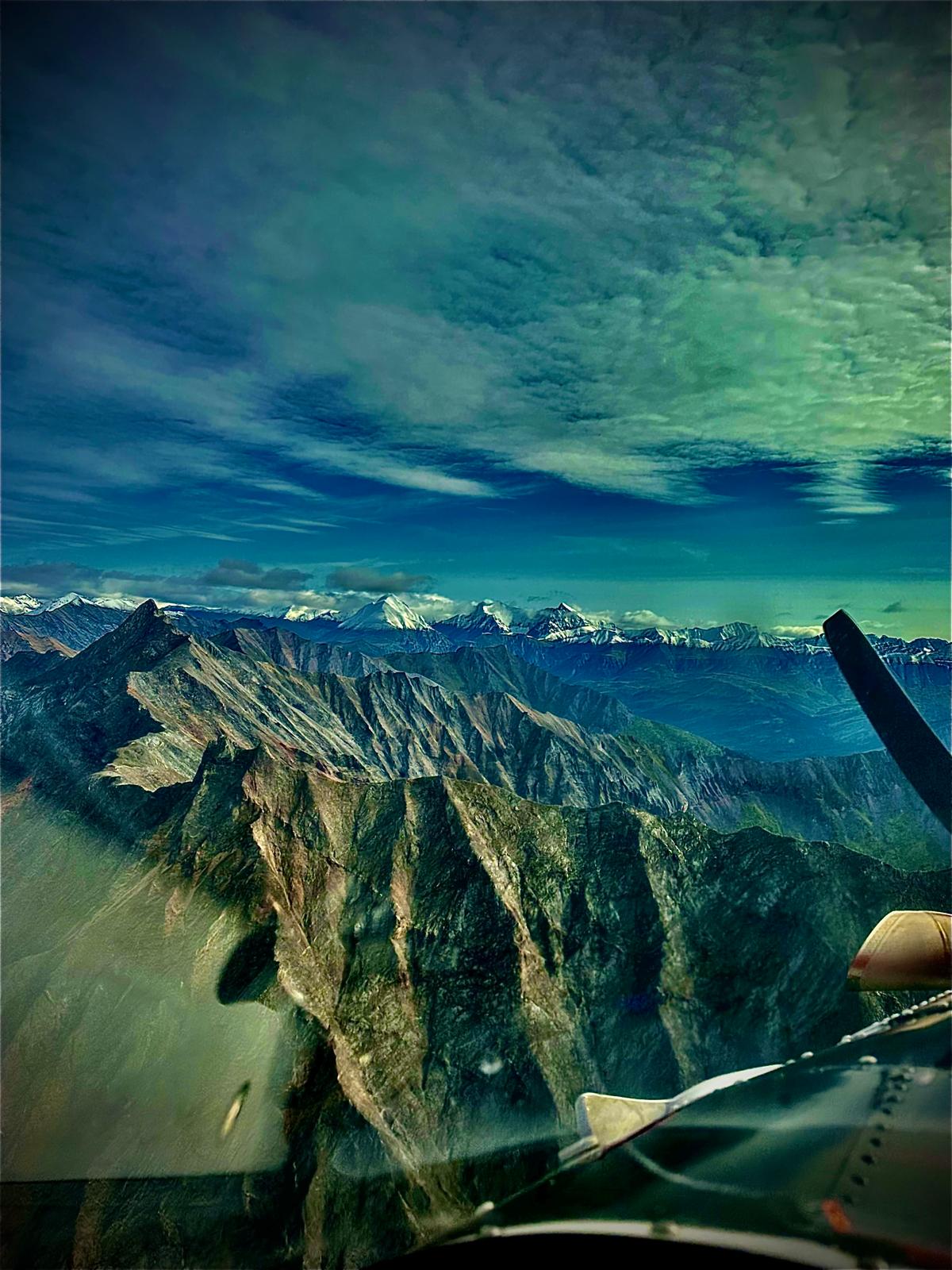
Window access. Plexiglass windows introduce scratches, glare, and color shifts. Where windows can be opened in flight, we open them. Where they cannot, we angle the aircraft so reflections stay out of the frame. For photographers who want a scenic ride without the technical layer, our Alaska flightseeing tours and Alaska wilderness flights pages cover those options.
Ten Aerial Subjects Worth Flying For
Alaska offers a catalogue of subjects that photographers travel from around the world to shoot. Here is what people come for.
Glacier surfaces. From the air, glaciers reveal flow lines, debris bands, and crevasse fields. Morning light is flat. Late afternoon brings out texture and blue tones in the ice. For time on the surface itself, see our Alaska glacier tours and Alaska glacier landing tours pages.
Mountain peaks. The Alaska Range holds some of the most photographed peaks in North America, including Mount Hayes and Mount Moffit. For dedicated Alaska Range flights from the Fairbanks area, see our Denali flightseeing tours and Fairbanks flightseeing tours pages.
Tundra as abstract color. From altitude, tundra reads as a quilt of greens, browns, reds, and golds. Wide-angle compositions from above work especially well in fall.
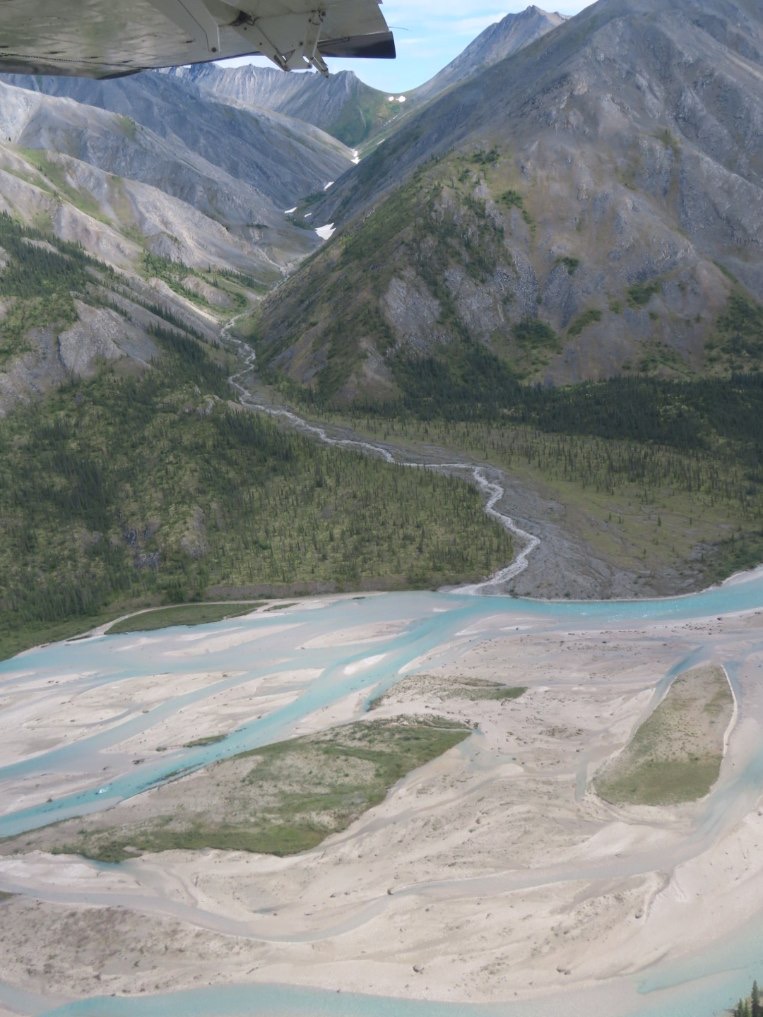
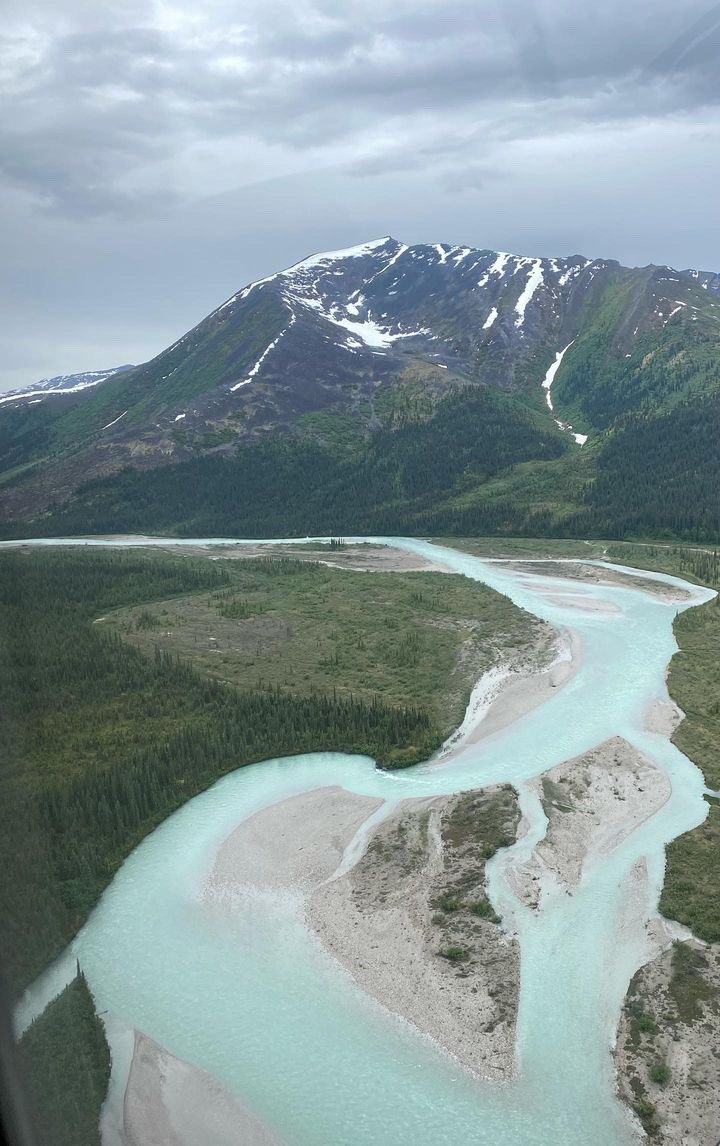
Braided glacial rivers. Channel networks spread across gravel bars in silver and pale blue. Shot straight down, they look like abstract etchings. Shot obliquely, they become leading lines into the landscape.
Caribou on the move. The Western Arctic Herd migrates across the region. A band of animals spread across tundra is a classic Alaska aerial subject.
Moose in wetlands. Often visible wading in shallow water. Best photographed with a telephoto from a higher altitude.
Dall sheep on ridgelines. White animals on gray rock create strong contrast. Difficult to spot without a pilot who knows where they hold.
Grizzly bears on open slopes. Often spotted digging on alpine terrain. Distance is essential — both for safety and for better composition.
Coastal wetlands. The Chukchi Sea coast around Kotzebue holds extensive wetland systems. Excellent for abstract patterns and waterfowl.
Arctic light. Summer nights in the Arctic Circle produce hours of golden light. This is one of the reasons photographers fly north.
Our Alaska wildlife viewing tours page covers flights designed specifically around animal observation.
Choosing the Right Window and Seat
Seat choice matters more in aerial photography than in most other kinds of shooting. These rules help.
Sun direction first. If the sun is behind you, the landscape is frontlit. If the sun is ahead, you are shooting into it. Side-lighting brings out texture. Each direction produces different results. Tell us what you want and we will assign the seat accordingly.
Glaciers read better from one side. Depending on the route, the glacier may be on the left or right. We know the standard routes and will tell you which seat gives the best view.
Wildlife requires flexibility. Animals move. If you are tracking a bear or a moose, both sides of the aircraft may come into play. A window seat on either side with good visibility works.
Front seats are not always best. The seat next to the pilot is often the least useful for photography because the wing and strut block part of the view. The mid-cabin and rear seats typically offer cleaner sightlines.
If you are flying with a specific shot in mind, describe it when you book. We can often plan the aircraft position and seat assignments around it. For photographers who want to combine an aerial session with ground work, our Alaska hiking drop-off service and Alaska wilderness drop-offs pages cover point-to-point access.
Light Windows You Should Plan Around
Light is the variable that most determines the outcome of a photo flight. Understanding the basic windows helps you plan.
Golden hour. The hour after sunrise and the hour before sunset. Warm color, long shadows, and directional light. At high latitudes in summer, this window can stretch well past an hour.
Midday. Harsh light. Short shadows. Better for texture and detail than for dramatic landscapes.
Overcast. Flat light. Shadows disappear. Useful for glacier surfaces and tundra patterns, less useful for mountain scenes.
Blue hour. The window before sunrise and after sunset when the sky turns deep blue. Difficult to shoot from a moving aircraft but spectacular when conditions align.
We track forecasts and cloud cover when planning photo flights. Building a buffer day into your trip is strongly recommended, especially if you have specific images in mind.
Camera Settings That Hold Up in the Air
Aircraft vibrations, moving subjects, and window glass all fight against clean images. These settings help.
-
Shutter speed: 1/1000 or faster. This freezes both aircraft vibration and subject motion.
-
Aperture: f/5.6 to f/8. A balanced depth of field without pushing the lens into diffraction.
-
ISO: as low as light allows. Higher ISO introduces noise that is harder to fix in post.
-
Focus: continuous or manual infinity. Autofocus can hunt through windows. Manual focus set to infinity often beats it.
-
Lens choice: a wide zoom (24-70mm) for landscapes and a telephoto (200mm or longer) for wildlife. Bring both if you can.
-
Lens hood: leave it on. It cuts glare from windows and bright ice.
-
Polarizing filter: use with caution. It can create uneven sky gradients at wide angles.
If you carry two camera bodies, keep one set for wide compositions and one for telephoto work. Swapping lenses in a moving cabin is difficult.
How to Brief Your Pilot
The best aerial photographs come from clear communication before takeoff. Tell your pilot:
-
What you want to shoot. Glaciers, wildlife, specific peaks, or abstract patterns.
-
What direction you want the light coming from. Front, side, or back.
-
How you want to approach a subject. Direct pass or oblique angle.
-
When to circle back. If you miss a frame, say so. A second pass often gets the shot.
Our pilots have flown photographers for years. They know the difference between a passenger who wants a scenic ride and a photographer who needs a specific frame. Tell us which you are when you book. For photographers who want to combine aerial work with ground-based shooting over multiple days, our Alaska National Park Tours and remote wilderness float trips pages outline extended options.
Why Photographers Fly With Golden Eagle Outfitters
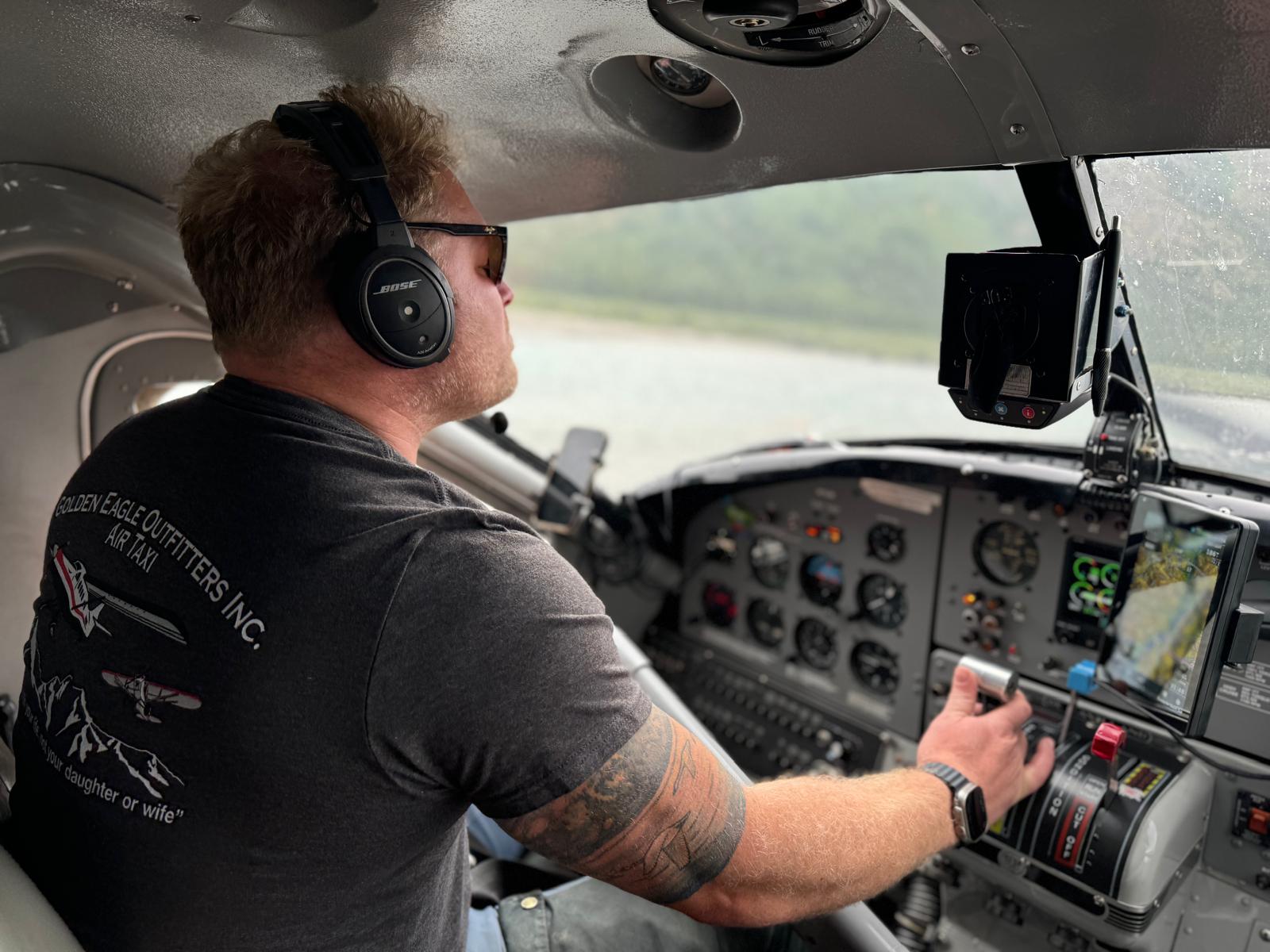
Golden Eagle Outfitters has flown Alaska’s backcountry for decades. Our pilots have watched light shift across glaciers through every season. They know where caribou tend to move in late summer, how the Alaska Range looks when afternoon clouds carve shadows across the peaks, and which side of the aircraft gives the cleanest angle on a river confluence. That knowledge is what turns a scenic flight into a working photo session.
For photographers who want a broader picture of how Alaska flying works, our Alaska bush flights page covers the fundamentals. For those who want access to the same terrain on the ground, our Alaska backcountry air taxi service offers point-to-point transport.
Frequently Asked Questions
Do you offer dedicated photography flights?
Yes. We build flights around photography goals, including custom departure times and routing.
Can windows be opened in flight?
It depends on the aircraft. Some of our fleet has windows that open for photography. Ask when you book so we can assign the right aircraft.
How long should a photography flight be?
Most photography flights run between one and two hours. Longer flights can be arranged for specific subjects or multi-location shoots.
Where do photography flights depart from?
We fly photography missions from Kotzebue in the northwest and Delta Junction in the Interior. For flights departing from the Fairbanks area, see our Fairbanks flightseeing tours and Denali flightseeing tours pages.
Can I bring multiple camera bodies and lenses?
Yes. Tell us your gear weight when you book so we can plan the load. Anglers who want to combine photography with fishing should review our Fly-In Fishing Alaska page.
What if the weather does not cooperate?
We reschedule when possible. Building a buffer day into your trip is strongly recommended.
Can I book a photography flight for a commercial project?
Yes. For commercial or editorial work, contact us directly to discuss aircraft configuration, timing, and any special requirements.
Do you offer flights specifically for wildlife photography?
Yes. Our Alaska wildlife viewing tours page covers flights designed around wildlife observation and photography.
Can I combine aerial and ground photography on the same trip?
Yes. Our Alaska hiking drop-off service, Alaska camping drop-off service, and Alaska rafting drop-off service pages cover ground logistics for extended photography missions. For custom multi-leg itineraries, see our Alaska private air charter and Alaska bush plane charters pages. For travelers departing from the northwest hub, our Kotzebue air taxi page covers local access.